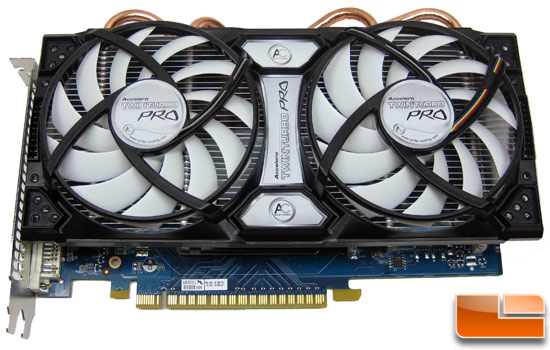
ECS GTS 450 Black Series Review: Performance and Value
The ECS GTS 450 Black Series is a useful reminder that value graphics cards are often defined less by headline branding than by cooling, tuning, and how honestly they are priced.
If you are looking at this card today, the usual questions are straightforward: was the ECS version actually better than a reference GeForce GTS 450, how much performance did the factory overclock buy, and was it close enough to faster alternatives to make sense for a budget build?
Period launch coverage from Tom’s Hardware, the board-specific review from Legit Reviews, and power observations from PC Perspective point in the same direction. The GTS 450 was built as a mainstream Fermi card, not a giant-killer, and the ECS Black Series tried to stand out through better acoustics, lower temperatures, and some extra clock speed rather than through a different GPU altogether.
That context matters. For readers browsing the MaximoNET blog or comparing older GPUs from the same era, the useful takeaway is not whether this card still fits a modern gaming PC. It is whether ECS made one of the more sensible versions of Nvidia’s midrange 2010 design. On the available evidence, the answer is yes, with a few caveats around size, power, and price positioning.
Overview of the ECS GTS 450 Black Series
The standard GeForce GTS 450 launched as a 192-core Fermi card aimed at mainstream players who wanted DirectX 11 support without paying GTX 460 money. Tom’s Hardware described it as a new 192-core part built around the GF106 GPU, with a narrower 128-bit memory path than the GTX 460 and a clearer budget-gaming role.
ECS took that base specification and tried to improve the parts buyers notice first in day-to-day use:
- Higher stock clocks: ECS shipped the card above Nvidia’s reference settings.
- A much larger cooler: the Black Series used an Arctic Cooling Accelero Twin Turbo Pro instead of a simpler reference-style setup.
- Lower noise and heat: period testing consistently treated those as the card’s strongest differentiators.
- Still a midrange card: the cooler improved the experience, but it did not move the GTS 450 into GTX 460 territory.
That combination made the card easy to understand. It was for budget-conscious builders who still cared about noise, thermals, and a bit of overclocking headroom. In other words, it was a more polished GTS 450, not a disguised higher-tier product.
Key Specifications
Legit Reviews’ board-level test gives the clearest snapshot of what ECS changed compared with the baseline card.
| Spec | Reference GTS 450 | ECS GTS 450 Black Series |
|---|---|---|
| GPU | Nvidia GF106 | Nvidia GF106 |
| CUDA cores | 192 | 192 |
| Core clock | 783 MHz | 850 MHz |
| Shader clock | 1566 MHz | 1700 MHz |
| Memory | 1 GB GDDR5 | 1 GB GDDR5 |
| Effective memory speed | 3600 MHz | 4000 MHz |
| Memory bus | 128-bit | 128-bit |
| Outputs | Partner-dependent | Dual-link DVI-I x2, mini-HDMI x1 |
| Power | Single 6-pin PCIe | Single 6-pin PCIe |
| Thermal design power | 106 W | 106 W GPU rating, with upgraded cooling |
A few terms are worth translating into plain English:
- Fermi: Nvidia’s architecture generation for the GeForce 400 series, covered more broadly in the GeForce 400 series overview.
- 128-bit memory bus: one of the card’s main limits versus faster options such as the GTX 460 1 GB, especially when image-quality settings get heavier.
- Factory overclock: ECS shipped the card faster than reference out of the box, so buyers did not need manual tuning to see some extra performance.
- Black Series cooler: the custom cooler was the product’s real selling point, because it changed noise and temperatures more than the modest clock bump changed class-leading speed.
Performance Analysis
The most useful way to read this card is as a good version of a midrange GPU. The ECS card did not rewrite the GTS 450 story, but it did make the platform easier to live with. Legit Reviews measured a respectable X4841 in 3DMark Vantage at stock settings, which fits the broader picture of solid mainstream performance rather than a dramatic upset.
| Test area | Observed result | Useful takeaway |
|---|---|---|
| 3DMark Vantage | X4841 at stock clocks | Healthy result for a factory-overclocked GTS 450, but still a midrange score. |
| Batman: Arkham Asylum GOTY | Playable at 1920×1200 with settings pushed high, including 8xAA | Older or better-optimized games were a comfortable fit for this GPU class. |
| Metro 2033 | In Legit Reviews’ test, the ECS card traded punches with MSI’s overclocked Cyclone variant | Very demanding games still exposed the limits of the GPU, even with the factory OC. |
| StarCraft II | Reviewers described all tested GTS 450 cards as doing very well | Lighter or CPU-sensitive titles were a more natural home than punishing shader-heavy games. |
| Idle and load thermals | 29C idle, 46C peak load on an open bench | This was the standout result of the Black Series design. |
| Total system power draw | 102 W idle, 238 W load in FurMark | Reasonable for a Fermi-era midrange card, though not especially frugal by modern standards. |
The strongest performance story here is not raw frame rate. It is sustained performance without a thermal penalty. Legit Reviews called the card the coolest of the five GTS 450 variants it had tested, with the fan still at only 30% during peak load. That matters because factory-overclocked cards only feel worthwhile if they stay quiet and stable. On this point, ECS did the work.
There was also real manual overclocking headroom left in reserve. Using EVGA Precision, Legit Reviews pushed the sample to 985 MHz on the core and reported a roughly 14% improvement in 3DMark Vantage. That does not turn the card into a different tier, but it does reinforce the same theme: the cooler was generous enough that ECS was not running the board at its comfort limit.
The practical reading is simple. At stock settings the ECS Black Series was strong for 1680×1050 and often workable at 1920×1200 in less punishing games. In very demanding titles, the extra clocks helped, but the card still behaved like a GTS 450. Context matters more than marketing here.
Comparison with Competitors
This is where the card’s value gets more nuanced. The ECS version was clearly better executed than a bare reference design, but buyers in 2010 were not choosing in a vacuum.
- Against a reference or lightly tuned GTS 450: the ECS card had the better feature story. The custom cooler, lower temperatures, and quieter behavior made it one of the more appealing partner versions.
- Against the GTX 460 1 GB: the gap in class remained visible. Tom’s Hardware noted that the GTS 450’s 128-bit memory arrangement was half of what the GTX 460 1 GB offered, which is part of why anti-aliasing and heavier loads hit the smaller card harder.
- Against Radeon HD 5750 and HD 5770 class cards: the GTS 450 sat in a much fairer fight. PC Perspective’s launch-era testing even called the GTS 450 relatively power efficient for a Fermi board and close to HD 5770 system-level power behavior.
- Against the Radeon HD 6850: the more honest view is that the 6850 was usually a step-up option. If a shopper could reach that tier without much extra cost, the ECS card’s cooler alone was unlikely to make up the raw performance difference.
That is the key value argument: the ECS card made the most sense when priced like a normal GTS 450 plus a modest premium for better thermals. If it drifted too close to GTX 460 or HD 6850 pricing, the value case weakened fast. A cooler can improve a product category; it cannot erase it.
User Feedback and Review Pattern
There is a consistent pattern across period reviews and buyer discussion around cards like this one. The praise was practical, not dramatic:
- Positive: quiet operation, excellent cooling, sensible factory overclock, and enough performance for mainstream gaming at the time.
- Mixed: the triple-slot footprint was a real tradeoff, especially for buyers who cared about future SLI flexibility or had cramped boards.
- Negative: price sensitivity was always the risk. Even a well-built GTS 450 could look less attractive if a GTX 460 or stronger Radeon card was only one step further up the shelf.
- Practical buyer note: ECS also omitted a mini-HDMI to HDMI adapter in the reviewed package, which was minor but inconvenient for living-room or HDTV use.
That pattern still reads as believable today. No credible review treated the Black Series as a miracle product. What they did show, repeatedly, was a board partner making a midrange GPU cooler, quieter, and easier to overclock than average. For many buyers, that is enough.
Final Thoughts
The ECS GTS 450 Black Series succeeds on the terms that actually matter for this class of hardware. It offers the expected GeForce GTS 450 performance envelope, then improves the ownership experience with far better cooling and very strong noise behavior. The factory overclock is helpful, and the extra manual headroom is a bonus rather than a necessity.
The limits are equally clear. This is still a Fermi-era 128-bit midrange card, and no amount of cooler hardware changes that. Shoppers who could stretch to a GTX 460 or a clearly faster Radeon option had reason to keep looking. But buyers who wanted an efficient version of the GTS 450 formula, especially one that ran unusually cool for its time, had a strong candidate here.
Bottom line: the ECS GTS 450 Black Series was a compelling value when bought as a premium GTS 450, but not when judged as a substitute for the next tier up. If you want more context on older PC hardware decisions, the MaximoNET home page is a good place to keep browsing.